
When a wastewater force main fails, the headlines usually blameage,corrosion, orunexpected surge...
Anyone who has opened a buried valve gearbox in Florida has seen it. You lift the lid expecting to see a grease packed dry gearbox, but instead you find water within. Sometimes it’s groundwater creeping through sandy soils. Sometimes it’s stormwater that never drains out. Either way, that gearbox sitting on top of the valve may spend much of its service life in conditions far closer to submerged than most specifications ever anticipated.
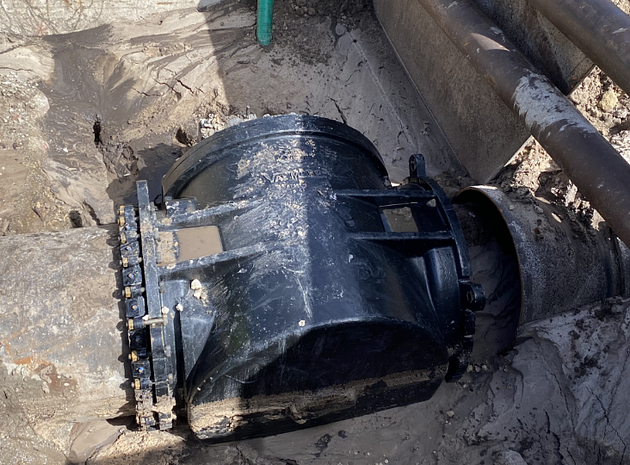
In many parts of the country, a manual worm gear operator is almost an afterthought in valve selection.
Specify the valve.
Confirm the torque.
Pick a gear ratio.
Move on.
But in Florida, the environment doesn’t always cooperate with standard assumptions.
Between shallow water tables, saturated soils, and buried valve installations, worm gear operators often live in conditions that look less like “weatherproof service” and more like permanent groundwater exposure.
The valve may be designed for it.
The gearbox often isn’t.
And that difference shows up years later when operators attempt to cycle a valve that hasn’t moved since installation.
The Quiet Reality of Buried Valves in Florida
Florida utilities operate in a unique hydraulic and geotechnical environment.
- High groundwater tables
- Sandy soils with rapid infiltration
- Frequent rainfall and storm events
- Buried valve that rarely stay dry
Even when installations are designed to drain properly, groundwater intrusion is common.
Over time, many buried valves experience:
- standing water
- saturated soils
- periodic submersion
For a gearbox mounted above grade, this may not matter.
For a gearbox installed below grade or inside a valve vault, the story changes.
Water finds its way in.
Eventually.
Why Worm Gear Operators Matter
Most large quarter-turn valves used in water and wastewater systems — particularly butterfly valves (AWWA C504 & C516) and plug valves (AWWA C517) — rely on worm gear operators to generate the torque required for operation.
These gearboxes provide:
- mechanical advantage
- controlled valve movement
- inherent self-locking capability
Modern designs include robust materials, sealed housings, and grease lubrication intended for long-term service. Many models are grease-filled and sealed for life (manual operation — buried service).
Worm gear operators are commonly produced with cast iron housings in traveling nut designs or ductile iron housings in externally adjustable stop designs. The distinction is largely driven by how mechanical loads are transmitted through the gearbox. Externally adjustable stop designs place additional stress on the housing through the stop bolts during valve positioning and seating, which is why ductile iron housings are typically used for their higher strength. Traveling nut designs do not introduce these same external loading conditions on the housing. As a result, cast iron housings are widely used in this configuration and are typically engineered with a 5:1 safety factor on the housing, providing ample structural reliability.
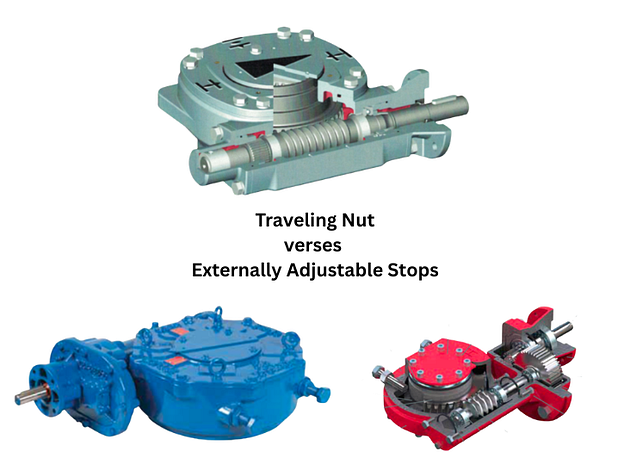
Under normal operating conditions, these designs perform exceptionally well.
But the key phrase there is:
normal operating conditions…
The Water Egress Problem
Even well-sealed gearboxes are not immune to long-term environmental exposure.
Small seal imperfections, temperature cycling, and pressure changes inside buried vaults can allow slow water migration into the housing.
Once water enters a gearbox, several things begin to happen:
- Grease dilution
- Bearing corrosion
- Gear surface degradation
- Increased torque requirements
None of these occur overnight.
The problem may remain invisible for years, until the day the valve must move.
Operators may see:
- excessive handwheel effort
- seized gearing
- damaged bearings
- catastrophic gear failure
At that point the valve becomes a maintenance project rather than a control device.
Not All Gearboxes Are the Same
This is where IP protection ratings become important.
The IP (Ingress Protection) rating describes how well equipment resists intrusion from solids and liquids.
Many standard worm gear operators used in municipal systems do NOT meet an IP rating, meaning they are NOT designed to withstand continuous submergence conditions.
Some gearboxes are designed for temporary submersion, while others are engineered for continuous submerged environments.
In regions like Florida, that distinction matters.
Buried and Submerged Are Not the Same Thing
One subtle specification issue shows up frequently in valve and gearbox language.
Specifications will often state that a gear operator must be suitable for “buried or submerged service.”
At first glance, those sound like the same condition.
They aren’t.
They represent two completely different environmental challenges.
Buried Service
A gearbox rated for buried service is designed to operate below grade with a stem extension or operating nut accessible from the surface.
Typical design considerations include:
- soil loads around the gearbox housing
- protection from debris and infiltration from above
- corrosion resistance in saturated soils
- sealed lubrication to prevent contamination
In this scenario, the gearbox may experience moisture, humidity, or occasional water, but it is not expected to remain underwater for extended periods.
This is the condition most standard AWWA-style worm gear operators are designed to handle.
For many installations, that level of protection is entirely appropriate.
Submerged Service
Submerged service is a completely different operating condition.
Here, the gearbox may be exposed to continuous or repeated full immersion.
This happens more often than expected in Florida due to:
- shallow groundwater tables
- flooded valve vaults
- poorly draining soils
- storm events that temporarily inundate infrastructure
Under these conditions, sealing systems must withstand hydrostatic pressure acting on every potential ingress point.
That includes:
- shaft seals
- cover gaskets
- fastener interfaces
Even small seal imperfections can allow water migration into the gearbox housing over time.
Once that happens, lubrication degrades, corrosion begins, and operating torque increases.
Why This Distinction Matters in Florida
The specification language may say “buried or submerged,” but the environment ultimately decides which condition the gearbox will face.
In many parts of Florida, buried installations behave much closer to submerged environments than designers initially anticipate.
That’s where enhanced sealing designs such as stating a minimum IP68–8 rated worm gear should be specified and start to make practical sense.
These designs are built to tolerate extended immersion and incorporate sealing systems intended to resist long-term water ingress.
Standard gear operators remain a solid choice for dry vaults, treatment plants, and above-grade installations.
But when buried valves sit in groundwater for months — or years — the difference between buried-rated and submersible-rated equipment becomes more than a specification detail.
It becomes a reliability decision.
Why IP68–8 Has Become the Sweet Spot
Across many Florida utilities, the specification conversation is beginning to shift toward IP68–8 rated gearboxes for below grade units.
These designs typically incorporate:
- enhanced gasket and seals
- a material changes to gearbox input shaft
- coating system enhancements
- upgraded grease
In practical terms, they are better suited for extended submersion conditions commonly found in valve vaults and buried installations.
This doesn’t mean standard gearboxes are inadequate.
Far from it.
Standard gear operators remain an excellent choice for:
- above-grade installations
- dry vaults
- locations where submersion risk is minimal
But when valves are buried in environments where groundwater intrusion is expected, not just possible, then a more robust sealing design becomes a long-term reliability decision.
A Small Component with a Large Impact
When utilities evaluate valve reliability, the focus is often on:
- seat materials
- valve coatings
- shaft sealing systems
- sizing and head loss
The gearbox rarely receives the same attention.
Yet the worm gear operator is the mechanical interface between the operator and the valve itself.
If it fails, the valve might as well not exist.
And replacing a buried gearbox can require:
- excavation
- vault entry
- valve disassembly
- extended service interruption
In many cases, the gearbox becomes the weakest link in an otherwise robust valve installation.
Designing for the Environment
The lesson isn’t that standard gearboxes are flawed.
The lesson is that environment matters.
In regions with dry soil conditions and well-drained installations, traditional gear operators may perform flawlessly for decades.
In Florida’s groundwater-rich environment, specifying gearboxes designed for long-term submersion such as IP68–8 rated designs, adds a layer of resilience that aligns with real-world operating conditions.
It’s a small specification adjustment.
But one that can significantly influence long-term valve reliability.
Final Thought
When a buried valve refuses to move years after installation, the instinct is often to blame the valve.
But more often than not, the issue isn’t the valve itself.
It’s the gearbox that spent a decade quietly sitting in groundwater.
In Florida’s environment, the difference between a standard gear operator and a robust IP68–8 design isn’t about marketing specifications.
It’s about designing equipment that acknowledges the reality of where it lives.
In Florida, the question isn’t whether a buried gearbox will see water, it’s whether the specification assumed it would.
To request a copy of a suggested plug valve or butterfly valve spec with the robust upgraded worm gear for Florida, please contact us.